
Does Tadalafil Expire? Shelf Life and Safety

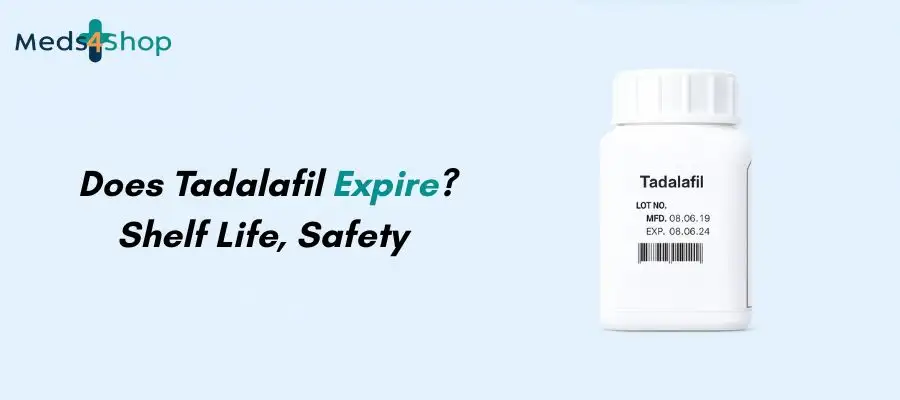
We usually don’t think to check the expiration date for meds. That is until we find a strip of pills that we haven’t used in a long time. Then we wonder, is it safe to take expired meds? Is there a date where it is no longer safe to take, like we wonder with the expire date for tadalafil? This guide will help address tadalafil’s lifespan, safety aspects, and storage.
What is Tadalafil?
The beginning of tadalafil’s development was marked by the filing of the initial drug application in 2000. Following its initial drug application, tadalafil was approved for the treatment of erectile dysfunction by the Food and Drug Administration (FDA) in 2003 under the name Cialis.
- Over time, approval requests broadened its uses:
- In 2008, it received approval for once-daily use for erectile dysfunction.
- In 2009, it was approved for use as an Adcirca for pulmonary arterial hypertension.
- In 2011, it was approved for use for benign prostatic hyperplasia.
How Does Tadalafil Work?
By improving the mechanisms for the flow of blood in the body, tadalafil improves the the body’s function for erections.
During sexual thoughts and/or stimulation, the body produces a gas like substance (nitric oxide) that helps in the erection process by triggering the production of cGMP. The output of cGMP helps relax the contractile muscle in the blood vessels and allow for the increase in blood flow to the area.
To end the erection, the body produces the PDE5 enzyme that depletes the amount of cGMP in the area. In the case of tadalafil, the PDE5 enzyme is inhibited so that the supply of cGMP is greater causing increased blood flow to the area and help maintain the erection.
What is unique about tadalafil is last effects within a duration of 36 hours, a greater time period than the other inhibitors of PDE5.
How Is Tadalafil Taken?
For the various conditions that are addressed with tadalafil, the dosage does not have a standard and ranges from 2.5 mg to 40 mg:
- For an erection, the prescription may be 10 mg or 20 mg to be taken immediately before intercourse.
- An erection may also be maintained by the lower doses of 2.5 or 5 mg, to be taken daily.
- As this is the case, a prescription for pulmonary arterial hypertension is even more extensive.
Tadalafil does not have to be ingested with food, as its absorption experience is not impacted by food. That type of drug is ideal, unlike alcohol and grapefruit, as these do have a risk of fluid interference. In this case, it may even be best to avoid the other.
What Are the Side Effects of Tadalafil?
Tadalafil, like any other medicine, has some side effects, all of which are expected to be mild and temporary.
The expected side effects are:
- Headache
- Indigestion
- Back pain
- Muscle pain
- Flushing
- Nasal congestion
More risky side effects include:
- Prolonged erection (priapism)
- Low blood pressure
- Changes in vision
- Allergic reaction
- Trouble breathing
Severe side effects require to see a doctor as soon as possible.
Does Tadalafil Expire?
Yes, like all medicines, Tadalafil has an expiration date. The FDA determines how long the medicine’s potency and safety is guaranteed, which is indicated by the expiration date label.
For most Tadalafil, the expiration date is set between 2 – 3 years, provided proper storage is followed.
If the expiration date has passed, the Tadalafil may be ineffective and have safety risks.
What is The Shelf Life of Tadalafil?
In most cases, the stability of Tadalafil is set between 2 to 3 years of shelf life. This is assuming that proper storage is followed.
If proper storage is not followed, the Tadalafil shelf life decreases.
What Affects Tadalafil’s Shelf Life?
The following affect Tadalafil’s effectiveness:
- Fluctuations in temperature
- High humidity
- Light
- Exposure to air
- The type of formulation (tablet, etc.)
The effectiveness of Tadalafil is determined by following the label instructions for storage.
Is It OK to Take Expired Tadalafil?
Ultimately, even expired tadalafil is unlikely to cause serious harm, but there are potential concerns to consider, such as:
- Less Effectiveness
- Potentially Unpredictable Results
- Active Ingredients May Break Down
- Increased Chance of Side Effects
Tadalafil has important uses, such as for pulmonary arterial hypertension, and for patients, decreased effectiveness can result in greater health concerns.
What Happens If You Take Expired Cialis?
Decreased Effectiveness is the most common trade off when taking expired tadalafil, but it also means the drug won’t have the effect that it is intended to.
For example:
- Erection response won’t improve
- Symptoms associated with BPH will still exist
- Symptoms associated with PAH will likely get worse
In rare circumstances, taking expired tadalafil that has broken down may cause adverse side effects and potentially even contamination, especially if the drug has been stored improperly.
How to Safely Store and Dispose of Tadalafil
Safe Storage
- Leave it in the original packaging
- Keep in a place at room temperature (68-72 degrees F)
- Keep in a dry, dark place (away from direct sunlight and the bathroom)
- Keep out of reach of children and pets
Safe Disposal
- Take advantage of drug take-back programs when they are available
- Do not place pharmaceuticals in the toilet
- Mix the pharmaceuticals with ground coffee or dirt to decrease the potential for abuse, contamination, and adverse environmental effects before throwing in the trash
- Remove personal identifiers from the packaging
Takeaway
Tadalafil can expire, so be aware of the expiration date that is printed on the packaging. Expired tadalafil, while likely not to be harmful in most circumstances, can be largely ineffective for the patient and be a let-down for someone who has important uses for tadalafil.
For safety and efficacy, tadalafil should be stored correctly and not used beyond its expiration date. If there are any remaining questions, your healthcare provider should be consulted. Also, for the best results, a new prescription should be used.